

Neil A. Carousso produces NewsNation’s flagship political show The Hill. Watch The Hill weekdays at 6 PM ET for unbiased political news and exclusive access in the nation’s capital.
-
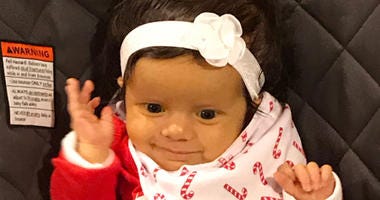
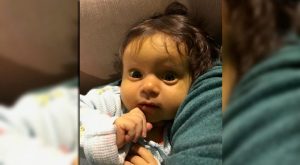
3-Month-Old New Jersey Girl In Need Of Life-Saving Liver Transplant
RED BANK, N.J. (WCBS 880) — A New Jersey family is looking for an organ donor to save the life of a 3-month-old girl battling a devastating liver disease.
Two weeks after Edie Rose O’Neill was born, she became sick with an undiagnosed liver disease.
Her health quickly deteriorated on Jan. 11, and she was airlifted to The Children’s Hospital of Philadelphia, where she is getting around-the-clock treatment in the pediatric intensive care unit.
Her only hope now is a liver transplant.
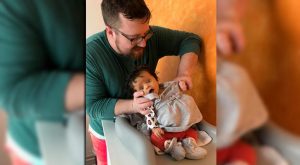
“All we can do from here is transplant her liver, there’s no other option,” her mother, Bridget O’Neill, of Red Bank, tells WCBS 880. “We’re talking about weeks instead of even months to work with.”
Doctors are looking for a very specific donor profile and they’re hopeful they can find a living organ donor.
“Someone between 21 and 30 years old, either an O blood type or an A blood type — so it could be positive or negative, and around 100 pounds or less, which is very difficult to find and we acknowledge that,” O’Neill said. “She receives blood and blood product every single day basically all day and that’s kind of keeping her plugging along for right now while we try to go through this process of finding either someone that matches or she’s also very high on the deceased donor list, but because she’s a baby it’s very difficult to find someone who meets the specifications of body type and weight that would be appropriate for her, she’s a little over 8 pounds.”
The liver is the only organ in the body that can regenerate, meaning the livers of both the donor and the recipient can grow back to full size approximately three months after surgery.
If you or someone you know can help this family, contact them directly at EdieTheExtraordinary@gmail.com.
A GoFundMe page has also been set up to help raise money to pay for medical costs not covered by insurance.
Neil A. Carousso produced this story and interviewed the family for WCBS Newsradio 880.
-
NYC Marathon: Debut Runner Wins Women’s Title In Upset, Men’s Champ Wins For 2nd Time
NEW YORK (WCBS 880/AP) – More than 50,000 runners made their 26.2-mile trek through the five boroughs on Sunday as part of the 49th annual TCS New York City Marathon.
The sights and sounds of the #nycmarathon2019, from start to finish. We hope you enjoyed today's team coverage and congratulations to all the runners! https://t.co/4pbHKmiiA8 pic.twitter.com/YEEeC6iv8S
— WCBS 880 (@wcbs880) November 3, 2019
They hailed from all over the city and from around the world, kicking off the race at the Verrazzano Bridge on Staten Island at 8:30 a.m.
The weather was perfect for the race, with temperatures rising from the 40s into the low 50s by afternoon under sunny skies.
The oldest runner in the #NYCMarathon is 86yr old Ginette Bedard of Howard Beach. She says people on the course say they want to be like her at her age. She wishes more people would do this. It helps her mentally and physically. This is her 17th race. @wcbs880 @nycmarathon pic.twitter.com/VjuLGPmy4F
— Peter Haskell (@peterhaskell880) November 3, 2019
Like every year, the race has led to plenty of street closures. Find a complete list of the closures here.
About a million spectators filled the streets surrounding the route, banging drums and cheering on the runners, from the brownstones of Fort Greene to the towering apartment buildings of Long Island City.
Thousands of NYPD officers joined the spectators. Security was tight, with hundreds of blocker trucks and other safety measures protecting attendees.
In the race, Joyciline Jepkosgei powered away from four-time winner Mary Keitany to win the women’s title at the New York City Marathon in her first race ever at 26.2 miles.
Jepkosgei crossed the finish line in Central Park in 2 hours, 22 minutes and 38 seconds Sunday, seven seconds off the course record.
The 25-year-old Jepkosgei holds the world record in the half-marathon but had never run this distance. The Kenyan pulled away from countrymate Keitany with about three miles to go. Keitany collapsed after finishing 53 seconds later.
Jepkosgei is the youngest winner in New York since 25-year-old Margaret Okayo in 2001. She also won the New York City Half-Marathon in March and is the first runner to win both events.
JOYCILINE JEPKOSGEI of Kenya wins the 2019 New York Marathon in her debut over the full distance. Mary Keitany second.
📸: NYC Marathon #TCSNYCMarathon pic.twitter.com/pxG4qy4Qim
— Nation Breaking News (@NationBreaking) November 3, 2019
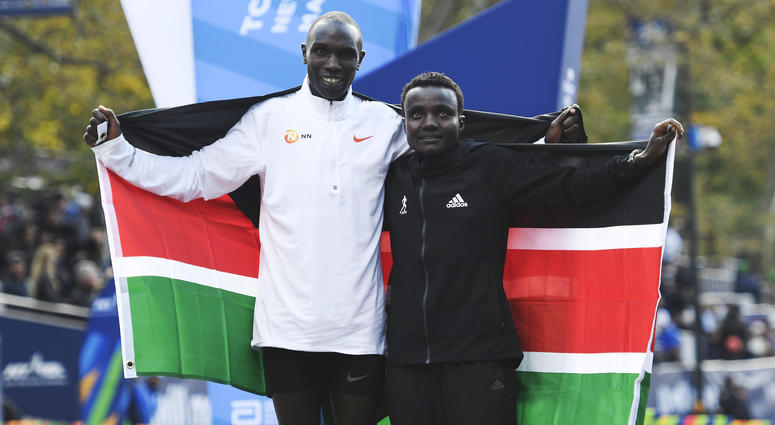
Geoffrey Kamworor of Kenya won his second men’s title in three years at the New York City Marathon.
Kamworor crossed the finish in Central Park at 2 hours, 8 minutes and 13 seconds Sunday.
He pulled away from countryman Albert Korir in the 24th mile. Korir finished second, and Ethiopian non-elite runner Girma Bekele Gebre was third.
The 26-year-old Kamworor finished third last year after winning in 2017.
He was greeted at the finish line by training partner Eliud Kipchoge, who completed the first sub-2 hour marathon last month — a feat accomplished under conditions so tightly controlled it didn’t qualify for the record books.
Kamworor, also the world record holder in the half-marathon, is the 10th multi-time winner.
Defending men’s champion Lelisa Desisa dropped out after seven miles, perhaps hurting following a grueling victory at the sweltering world championships last month.
Desisa, who is from Ethiopia, was in 17th place at the seven-mile mark before leaving the course. It was 45 degrees F at the start of the men’s race, ideal for marathoning.
.@GKamworor 🇰🇪 is 🔙🔛🔝! He is once again your #TCSNYCMarathon champion in the men’s open division! pic.twitter.com/EcxPKCNQOw
— TCS New York City Marathon (@nycmarathon) November 3, 2019
Manuela Schär of Switzerland has won her third straight women’s wheelchair title at the New York City Marathon, giving her eight consecutive marathon major victories.
After rolling ahead of the record pace for much of Sunday’s race, Schär crossed the finish about a minute off the mark at 1 hour, 44 minutes and 20 seconds.
Daniel Romanchuk of the United States repeated as men’s wheelchair champion in another tight finish over Switzerland’s Marcel Hug.
Romanchuk held off Hug with a final sprint through Central Park, crossing the finish line in 1 hour, 37 minutes and 24 seconds. Hug was one second behind for a second straight year, and Germany’s David Weir and American Aaron Pike were also within 10 seconds.
Last year, Romanchuk became the first American and youngest competitor to win the men’s division as a 20-year-old. He followed with victories this year at the Boston and London Marathons. Hug took the New York title in 2016 and 2017.
.@manuelaschaer 🇨🇭makes it 3️⃣ in a row! She is your 2019 #TCSNYCMarathon champion in the women’s wheelchair division! pic.twitter.com/7Diw7ftebQ
— TCS New York City Marathon (@nycmarathon) November 3, 2019
Now a repeat champion, Daniel Romanchuk 🇺🇸 wins the #TCSNYCMarathon men’s wheelchair division! pic.twitter.com/U49jDOCXxi
— TCS New York City Marathon (@nycmarathon) November 3, 2019
Among the runners was 86-year-old Ginette Bedard of Howard Beach. She’s the oldest person running in the race, and this is her 17th New York City Marathon. She said it helps her mentally and physically.
Douglas Bonmon of Michigan was sporting a pink bathrobe as he waited to start the race. This was his seventh marathon, but his first in New York.
“It’s like the United Nations of running,” said race director Jim Heim.
Traffic starting to pick up along 4th Avenue! @wcbs880 pic.twitter.com/DkjcJLxss9
— Mack Rosenberg (@MackRosenberg) November 3, 2019
Desi Linden now out in front as we go through Williamsburg @wcbs880 pic.twitter.com/5wi3RvkPlY
— Steve Burns (@StvBurns) November 3, 2019
Elite women are off! @wcbs880 pic.twitter.com/g00RCXrxf8
— Steve Burns (@StvBurns) November 3, 2019
“It’s like the United Nations of running.” #NYCMarathon Race Director Jim Heim says roughly 40% of the 52,000 runners are foreign. The magic is many will hear their native language and see their home flags while out on the 26.2-mile course. @wcbs880 pic.twitter.com/6EBMZOXCVs
— Peter Haskell (@peterhaskell880) November 3, 2019
Neil A. Carousso produced WCBS Newsradio 880’s team coverage of the 49th Running of the TCS New York City Marathon on Sunday, November 3, 2019.
-
Major Takeaways From The WCBS BNB Bank Business Breakfast
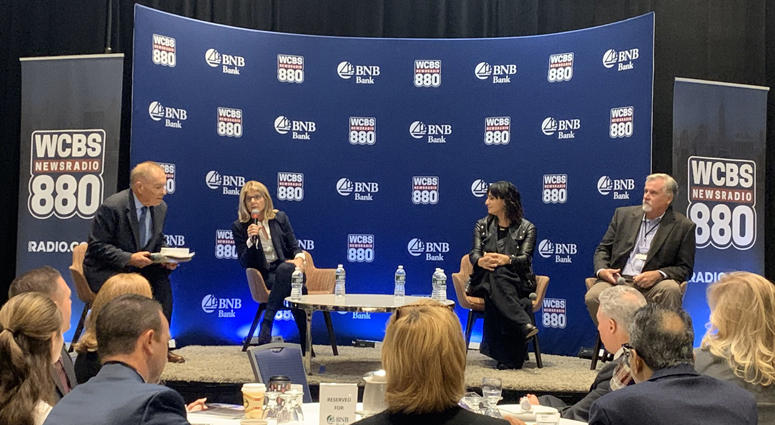
NEW YORK (WCBS 880) — Two major themes emerged at Thursday’s WCBS BNB Bank Business Breakfast on Long Island — the advantages of being local and getting noticed with your own unique business story.
Joe Connolly hosted the event at the Huntington Hilton and was joined by Mark Burford, co-founder of Blue Point Brewing Co., Kathleen King, founder of Tate’s Bake Shop, and Jaclyn Rutigliano, co-founder and CEO of Hometown Flower Collective, LLC.
.@BluePointBrewer founder Mark Burford says customer feedback is important in improving their product, but you cannot be consumed by online reviews. #WCBSBizBreakfast pic.twitter.com/E2nQtUvx8X
— WCBS 880 (@wcbs880) October 17, 2019
Burford said years ago people would ask if the locally made beer would make them sick and now local is a point of pride.
King built a chocolate chip cookie and bakery empire from scratch, but it wasn’t always easy. She says when she was knocking on doors to get Tate’s cookies into stores, occasionally someone would say “What makes you think these are good?”
“You believe in your own product, you believe in yourself. I love proving people wrong.” – Kathleen King, founder of @TatesBakeShop tells @JoeConnollybiz how she has persevered throughout her career. #WCBSBizBreakfast pic.twitter.com/mx1XARvKf7
— WCBS 880 (@wcbs880) October 17, 2019
Rather than debate with them she would just say, “I think they’re good” and walk out, thinking to herself, “They’ll be calling me someday!”
King says, “You believe in your own product, you believe in yourself. I love proving people wrong.”
Man of the people: @JoeConnollybiz is wading his way into the audience at the #WCBSBizBreakfast! In the traditional “who’s up/who’s down” poll, a majority of the owners are growing their businesses – namely financial services, aviation and technology. pic.twitter.com/03slIqbNB6
— WCBS 880 (@wcbs880) October 17, 2019
Connolly reports it seemed like more business owners compared to the previous breakfast in Junesaid business is up — namely in financial services, aviation and technology.
“When I asked is anybody seeing signs of a slowdown only two business founders raised their hand and one told me later the last eight months have been great it was due to slow,” Connolly said.
Here’s Jaclyn Rutigliano of Huntington’s Hometown Flower Co. in front of “Baby Blue” – the iconic symbol of their digital/mobile florist! #WCBSBizBreakfast pic.twitter.com/bBOAtynF90
— WCBS 880 (@wcbs880) October 17, 2019
When business owners asked for advice on how to get their business noticed, Rutigliano, a rising star in the Long Island business world, asked them, “What is your story?” She said it’s critical for business owner to tell their unique story on their website and “About Us” page because it will make them stand out.
One new business that drew a lot of interest at the breakfast is 3MomsOrganics.com, which sells TickWise — a DEET-free all-natural tick and insect repellent. It was started by two moms from Long Island and they say the third mom is the customer. They’re registered to sell in New York and New Jersey.
New York Mets legend and businessman Ed Kranepool, who is celebrating the 50th anniversary of the ’69 Miracle Mets Championship Season, made a special appearance and shared how to transfer a wining attitude and championship spirit in sports to business.
Neil A. Carousso is the producer of the WCBS Business Breakfast programs hosted by Joe Connolly.
-
Trump Directing Government To Revamp Care For Kidney Disease
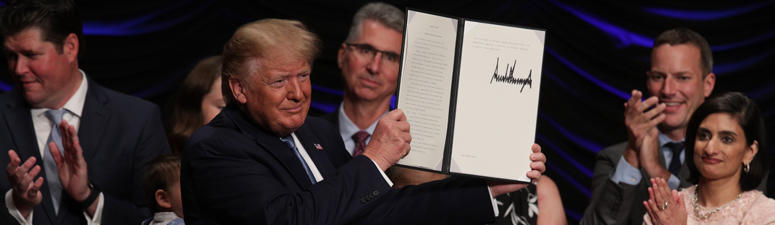
WASHINGTON (AP) — President Donald Trump signed an executive order Wednesday revamping care for kidney disease so more people whose kidneys fail can have a chance at early transplants and home dialysis, and others don’t get that sick in the first place.
Trump said his order was aimed at “making life better and longer for millions” by increasing the supply of donated kidneys, making it easier for patients to have dialysis in the comfort of their own homes and prioritizing the development of an artificial kidney.
The changes won’t happen overnight because some initiatives will require new government regulations.
Because a severe organ shortage complicates the call for more transplants, the Trump administration will try to ease the financial hardships for living donors by reimbursing them for expenses such as lost wages and child care.
“Those people, I have to say, have never gotten enough credit,” Trump said. “What they do is so incredible.”
Another key change: steps to help the groups that collect deceased donations do a better job. Trump said it may be possible to find 17,000 more kidneys and 11,000 other organs from deceased donors for transplant every year.
For families like those of 1-year-old Hudson Nash, the lack of organs is frightening. Hudson was born with damaged kidneys, and his parents hope he will be big enough for a transplant in another year. Until then, “to keep him going, he takes numerous medicines, receives multiple shots, blood draws and more doctors’ visits than I can count,” said his mother, Jamie Nash of Santa Barbara, California.
Today’s system favors expensive, time-consuming dialysis in large centers — what Trump called so onerous “it’s like a full-time job” — over easier-to-tolerate at-home care or transplants that help patients live longer.
More than 30 million American adults have chronic kidney disease, costing Medicare a staggering $113 billion.
Careful treatment — including control of diabetes and high blood pressure, the two main culprits — can help prevent further kidney deterioration. But more than 700,000 people have end-stage renal disease, meaning their kidneys have failed, and require either a transplant or dialysis to survive. Only about one-third received specialized kidney care before they got so sick.
“My health care providers failed me at the beginning of the dialysis continuum,” said transplant recipient Tunisia Bullock of Rocky Mount, North Carolina. Her kidney failure struck while she was being treated for another disease, and she woke up in the hospital attached to a dialysis machine. She told Trump that she hoped the new initiatives help other patients find care “with less confusion and more ease.”
More than 94,000 of the 113,000 people on the national organ waiting list need a kidney. Last year, there were 21,167 kidney transplants. Of those, 6,442 were from living donors, according to the United Network for Organ Sharing, which oversees the nation’s transplant system.
“The longer you’re on dialysis, the outcomes are worse,” said Dr. Amit Tevar, a transplant surgeon at the University of Pittsburgh Medical Center, who praised the administration’s initiatives.
Too often, transplant centers don’t see a kidney patient until he or she has been on dialysis for years, Tevar said. While any transplant is preferable, one from a living donor is best because those organs “work better, longer and faster,” Tevar said.
Among the initiatives that take effect first:
—Medicare payment changes that would provide a financial incentive for doctors and clinics to help kidney patients stave off end-stage disease. The goal is to lower the number of new kidney failure cases by 25% by 2030.
—a bonus to kidney specialists who help prepare patients for early transplant, with steps that can begin even before they need dialysis.
—additional Medicare changes so that dialysis providers can earn as much by helping patients get dialysis at home as in the large centers that predominate today. Patients typically must spend hours three or four times a week hooked to machines that filter waste out of their blood.
Home options include portable blood-cleansing machines, or what’s called peritoneal dialysis that works through an abdominal tube, usually while patients are sleeping.
Today, about 11% of patients in kidney failure get at-home dialysis and an additional 3 percent get an early transplant. By 2025, the goal is to have 80% of people with newly diagnosed kidney failure getting one of those options, officials said.
These changes are being put in place through Medicare’s innovation center, created under the Obama-era Affordable Care Act and empowered to seek savings and improved quality. The administration is relying on the innovation center even as it argues in federal court that the law that created it is unconstitutional and should be struck down entirely.
Other initiatives will require new regulations, expected to be proposed later this year. Among them:
—allowing reimbursement of lost wages and other expenses for living donors, who can give one of their kidneys or a piece of their liver. The transplant recipient’s insurance pays the donor’s medical bills. But donors are out of work for weeks recuperating, and one study found more than one-third of living kidney donors reported lost wages, a median of $2,712, in the year following donation. Details about who pays and who qualifies still have to be worked out.
—clearer ways to measure how well the nation’s 58 organ procurement organizations, or OPOs, collect donations from deceased donors. Some do a better job than others, but today’s performance standards are self-reported, varying around the country and making it difficult for government regulators or the OPOs themselves to take steps to improve.
“Some OPOs are very aggressive and move forward with getting organs allocated and donors consented, and there are those that are a little more lackadaisical about it,” said Pittsburgh’s Tevar. Unlike the medical advances in transplantation, “we haven’t really made big dents and progress and moves in increasing cadaveric organs or increasing live donor options.”
___
Associated Press writer Ricardo Alonso-Zaldivar contributed to this report.
Neil A. Carousso Interviewed Kim Commins-Tzoumakas, CEO of 21st Century Oncology and their Chief Policy Officer Dr. Connie Mantz for WCBS Newsradio 880.
-
What You Missed From The WCBS Small Business Breakfast
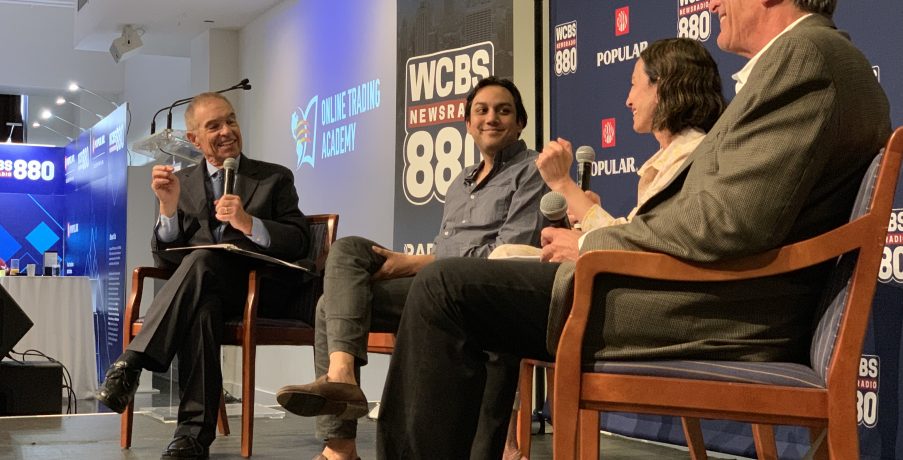
NEW YORK (WCBS 880) — The WCBS Small Business Breakfast was in full swing this morning, with inspiration stemming between an insightful panel of speakers and up-and-coming entrepreneurs. Special guests Fashion Icon Cynthia Rowley, Eric Kinariwala, founder of Capsule, and Peter Madonia, who runs the family-owned Madonia Bakery were moderated by WCBS’s Joe Connolly.
Small business owners listened and learned from these three heavy hitters before engaging in an informative Q&A.
When asked how she stays relevant in the fashion industry, Rowley says that she’s still having fun, and she’s driven by the creative process and loves to work on her brand. Throughout her career she has had no investors or partners, and only used $3,000 that she received from her grandmother! Rowley’s advice is that she never gets too high or low with success and failures. She is always learning and making adjustments.
”I like chaos. Isn’t that the key to branding?” @Cynthia_Rowley shares that she is always trying to do something new that’s true to her brand while keeping people guessing to keep it fresh. Today, her brand is digital only and fashion forward. #WCBSBizBreakfast @JoeConnollybiz pic.twitter.com/JWEw0fXo3Q
— WCBS 880 (@wcbs880) June 12, 2019
“You have to build something that people something that people want,” said Kinariwala, founder of the med-tech pharmaceutical company Capsule. The inspiration for Capsule stemmed from a sick-day where Kinariwala stood on line for far too long only to find out that his medication wasn’t available. Kinariwala is bringing the pharmaceutical industry to the palm of your hand to help make the industry that much more private and personal. When asked about the forefront of building his business, he notes there must be demand and that it doesn’t matter how good your advertising is or how large of a distribution.
“I wish I had an app like @capsulecares or run a family business [like Peter Madonia].” @Cynthia_Rowley says creative designing and fashion is difficult. Technology offers many options but can be limiting in its own way. #WCBSBizBreakfast @JoeConnollybiz pic.twitter.com/PicSHsmhJ7
— WCBS 880 (@wcbs880) June 12, 2019
Chief of Staff to former NYC Mayor Bloomberg and ex-COO of the Rockefeller Foundation, Peter Madonia left a job in political management to run his family’s 100-year-old bakery on Arthur Avenue in the Bronx. At the Small Business Breakfast he discusses his business principles and how he pays his bills in seven days.
An attendee asked Peter Madonia how he prepares for what he doesn’t know. Peter shares one of the first things he told @MikeBloomberg as his chief of staff, related to emergency response in NYC was “Go in knowing you don’t know.” #WCBSBizBreakfast @JoeConnollybiz pic.twitter.com/TZtPbP5f8Q
— WCBS 880 (@wcbs880) June 12, 2019
The event was held at the Manhattan Pavilion, and you can join us for breakfast and coffee on Long Island in the Fall. Stay tuned for more information. We’ll see you there!
We loved seeing you all at the @MetroPavilion this morning for the #WCBSBizBreakfast with @JoeConnollybiz! We enjoyed our riveting conversation on branding with @cynthiarowley, @capsulecares founder Eric Kinariwala and Peter Madonia. We hope to see you on Long Island in October! pic.twitter.com/nEDoe9VRpP
— WCBS 880 (@wcbs880) June 12, 2019
Neil A. Carousso produces the WCBS Small Business Breakfast and Small Business Spotlight programs.