
-
‘Shark Tank’ Investor Kevin O’Leary Shares His Keys To Small Business Survival
In Best Of, Featured, Guest, Interview, Latest, News Stories, Technology, The World, Top News, videosBy Neil A. Carousso
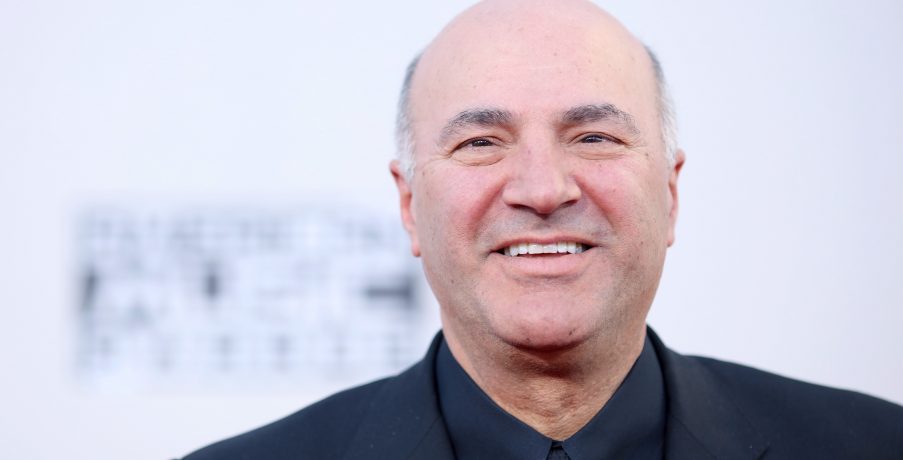
NEW YORK (WCBS 880) – Entrepreneur Kevin O’Leary stresses communication and a pivot to digital sales during the “unprecedented” coronavirus pandemic.
“Learn to communicate,” O’Leary advised in a wide-ranging interview with Joe Connolly on the WCBS Small Business Spotlight, sponsored by BNB Bank.
“Your employees and your customers: They want to hear from you every day,” he said.
O’Leary is known as “Mr. Wonderful” on ABC’s hit Friday night reality TV program “Shark Tank.” He is also a contributor to CNBC that re-runs episodes of “Shark Tank” when the market is closed. In 1986, he founded Softkey, an educational software company based in Toronto, that he sold to Mattel for $4.2 billion in 1999. He owns O’Leary Financial Group, which is a conglomerate of brands that includes investment firm O’Leary Funds. He also owns O’Leary Fine Wines. His net worth is estimated at $400 million.
“When you’re honest with your customers, they become incredibly loyal,” O’Leary said, adding, “The minute they smell B.S., you’ve lost them forever. Don’t lie to people.”
He shares his philosophy on business with Connolly, including that owners should become profitable by their third year in operations, or “take it behind the barn and shoot it.” During the global health crisis, O’Leary says owners must adjust to the changing market while playing to one’s strengths.
“They genuinely care about companies and products and services that they’ve grown to trust and they want to support them during this period of difficulty to make sure that these businesses survive,” he said.
One way to stay afloat, O’Leary underscored, is to learn digital marketing and focus one’s energy on targeting local customers.
“It means you may have to get a Shopify license, you may have to learn how to use DocuSign, you may have to understand the geo-locking tools of Facebook,” Mr. Wonderful said on the WCBS Small Business Spotlight Podcast.
“Geo-locking” is a tool within paid Facebook campaigns that allows users to target a preferred audience to optimize a paid post’s impact by demographics.
“I only want to spend my advertising dollars, reaching out to people in this specific area,” O’Leary explained, adding, “That’s what we’re finding is really working, being very concentrated in what you’re trying to do, because in times like these, you really want to play to your strengths.”
O’Leary told WCBS 880 he’s looking to cut real estate costs as his employees work from home. He said if employees are being productive and companies are using digital conferencing services and maximizing on digital marketing strategy, businesses can “save a ton of money.”
“Now the only thing is, it’s not good news for rates, it’s not good news for landlords, it’s not good news for retail space, it’s not good news for real estate, generally, because we don’t need it. Yeah, we need our houses and our apartments, but nothing else,” said Mr. Wonderful.
Hear more from entrepreneur Kevin O’Leary, including what opportunities he spotted in his “Shark Tank” investments, on the WCBS Small Business Spotlight Podcast above and on the RADIO.COM app.
-
Four Freedom Park Conservatory Uses Anonymous Tip App To Enforce Social Distancing On Roosevelt Island
By Neil A. Carousso
NEW YORK (WCBS 880) – Four Freedom Park Conservatory on Roosevelt Island is employing patented technology to keep people six feet apart at all times to slow the spread of COVID-19.
“They’re very proactive in wanting to encourage people to communicate these type of things,” said Anthony Lavalle, founder of report it® – a patented application that partners with schools, businesses and law enforcement agencies to expedite anonymous tips for non-emergencies.
Four Freedom Park Conservatory, Inc. operates and maintains the Franklin D. Roosevelt Four Freedom State Park. It also produces events at the park located at the southern tip of Roosevelt Island, overlooking the United Nations on Manhattan’s East Side. It has been a client of report it® for a few years and approached them about developing a solution to enforce social distancing.
“We geofence an area,” Lavalle explained.
A geofence is a virtual geographic boundary that enables software to trigger a reaction when a smartphone enters or exits a defined area. Report it® sets up geofencing for its partners throughout the country to enable users to submit an anonymous tip to companies and police to act upon in a timely manner.
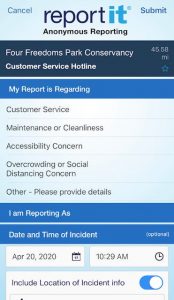
The Long Island based tech company was founded in 1999 at the outset of the Internet, harnessing the capability to collect and facilitate data such as photos, videos and a description of the complaint.
The park manager will receive a report immediately with key actionable information.
“We actually capture the geographic location of where that photo was taken, so that the receiver of the report knows exactly where this is occurring and where the correction needs to be made,” he said.
Those photos are also time-stamped for verification, which Lavalle said separates report it® from other applications such as the NYC 311 app because police may respond to an incident that occurred much earlier.
The report it® app is also available in all languages.
“I think that comfort level of people being able to utilize something in their native language to escalate a concern really helps them to communicate as well,” Lavalle emphasized.
He has seen an increase in reports through the app during the coronavirus pandemic.
-
Chinese Operatives Spreading Disinformation About Coronavirus To Sow Political Discord In US: Report
By Neil A. Carousso
WASHINGTON (WCBS 880) — China is looking to amplify disinformation about the coronavirus pandemic to exploit political divisions in the United States, according to a report in The New York Times.
The Times interviewed intelligence officials who work in six different U.S. agencies. The officials believe China is using tactics that resemble Russia’s efforts to sow discord during our elections by utilizing social media trolls to push agendas to sympathetic Americans who unknowingly propagate its messages.
“We’re seeing, now, tactics that are not surprising to many of us who served in government,” said Nadia Schadlow, Ph.D., former U.S. Deputy National Security Advisor for Strategy, in an interview with WCBS 880 producer Neil A. Carousso.
China is reportedly not only using social media to disseminate false information, but also sending text messages and messages via WhatsApp, which are more difficult for law enforcement to detect because it is encrypted.
One particularly unsettling message to U.S. officials that became widespread was one claiming President Donald J. Trump was set to issue a nationwide lockdown. The White House National Security Council tweeted “FAKE” in response.
Text message rumors of a national #quarantine are FAKE. There is no national lockdown. @CDCgov has and will continue to post the latest guidance on #COVID19. #coronavirus
— NSC 45 Archived (@WHNSC45) March 16, 2020
“It’s disturbing and upsetting that Americans would be taken advantage of during such a difficult time in our country’s history,” Dr. Schadlow said.
She is currently a senior fellow at the Hudson Institute, an independent policy organization in Washington, D.C. that promotes global security through research and analysis. In 2018, Dr. Schadlow advised the Trump Administration on national security strategy as an assistant to the president on The White House National Security Council.
“China’s much more of a strategic competitor to the United States,” Dr. Schadlow explained.
She noted both Democrats and Republicans have expressed concern over the Communist Party’s economic activities, including intellectual property theft.
“Essentially it wasn’t a level playing field doing business with China,” said Dr. Schadlow.
She added that when President Trump came into office in 2017, U.S. policy towards China shifted to “push back” against its malignant activities.
The World Trade Organization indicates China is the number one exporter in the world. It is also the largest supplier of goods to the United States. China accounts for 21.2 percent of overall U.S. imports, according to The Office of the U.S. Trade Representative.
Dr. Schadlow said critical technology and medicine has been manufactured in China over the last 15 years. She believes that will change as Americans prefer to have essential supplies produced in their country or U.S. allied nations.
“I do think we are going to see a shift in those areas,” the former National Security Council advisor said, adding, “There is a recognition that it is a national security concern.”
-
Schools Deliberate on Re-Opening Plan
By Neil A. Carousso
NEW YORK (WCBS 880) — As schools decide whether there will be classes on campus this fall, Rockland Community College President Dr. Michael Baston speaks with WCBS’ Neil A. Carousso about their preparedness for distance learning education heading into the coronavirus pandemic plus what their plan is for the fall.
-
Small Business Survival: Brooklyn Navy Yard Manufacturers Step Up During the COVID-19 Crisis
In Best Of, Featured, Guest, Interview, Latest, News Stories, Technology, The World, Top News, videosBy Neil A. Carousso
NEW YORK (WCBS 880) – Businesses at the Brooklyn Navy Yard industrial complex are revitalizing the country’s manufacturing amid the global pandemic.
David Ehrenberg is the President and CEO of the Brooklyn Navy Yard Development Corporation, which produces roughly $2.35 billion of annual economic output for New York City among more than 400 companies located there across various industries.
“These are not your old school manufacturers. These are very high-tech, very creative hardware companies,” Ehrenberg told WCBS 880’s Joe Connolly on this week’s WCBS Small Business Spotlight focusing on small business survival, sponsored by BNB Bank.
Brooklyn Navy Yard businesses employ more than 10,000 workers – many of whom have become essential workers as they produce vital medical equipment needed to treat the coronavirus.
“Our tenants have really been doing amazing, amazing things, producing everything from medical gowns to face shields, hand sanitizer and a series of other products,” said Ehrenberg, noting that this equipment is being shipped directly to hospitals.
Bednark Studio, Voodoo Manufacturing and Farmshelf – previous WCBS Small Business Spotlight subjects housed in the Brooklyn Navy Yard – are contributing to the broad COVID-19 fight. Bednark Studio is manufacturing face shields for frontline hospital workers in the City, 3-D-printing company Voodoo Manufacturing makes FDA-approved medical devices, and Farmshelf has been on the cutting edge of the changes in the U.S. food supply that has been accelerated by the coronavirus outbreak.
“A lot of people think that manufacturing is dead in New York and it’s not,” Ehrenberg said, adding that because of lower real estate prices in Brooklyn, growing technology companies that emphasize a high standard of craftsmanship and design can attract top talent the Big Apple has to offer.
The Brooklyn Navy Yard Development Corp. head told Connolly they started communicating with New York City officials and local hospitals about their needs before they contacted business owners to discover that they were ahead of the curve.
“We had companies who were ordering materials, who have relationships with factories in China, who were buying tens of thousands of gowns be shipped over here and donated,” he said.
Ehrenberg highlighted the “civic pride” of Brooklyn Navy Yard businesses, saying owners respond to his contacts by asking if there’s more they can do to contribute to the City’s response.
https://twitter.com/NeilACarousso/status/1252988378498379777
“The supply chains have just eased up, both, because of the level of demand, but also, you have certain countries (that) are keeping supplies for themselves right now,” he said.
His tenants have been able to manufacture fully American made products in their factories even before President Donald J. Trump invoked the Korean War era Defense Production Act to mandate U.S. companies to make medical equipment. The President and other government officials, namely New York Governor Andrew Cuomo, have revealed they are relying on countries like China, where the coronavirus originated, to import life-saving equipment such as ventilators and N95 masks.
Listen to the WCBS Small Business Spotlight Podcast above to hear how businesses in the Brooklyn Navy Yard are revolutionizing American manufacturing in the time of dire need.